
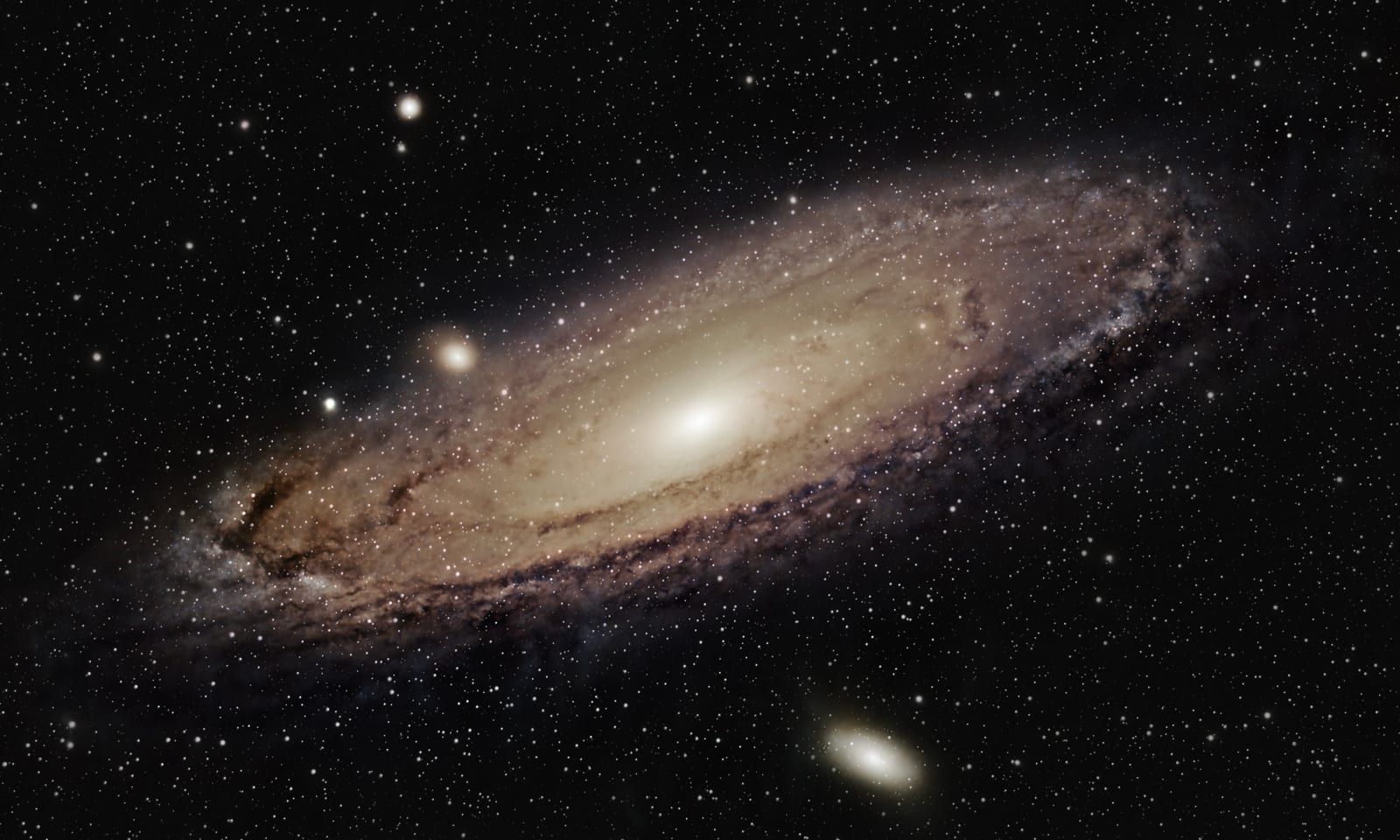
Back in December last year when it was cold (-6°C), clear and near perfect conditions for astrophotography. I decided to embark on a new project.
With a run of several consecutive clear nights on the cards I wanted to make the most of the opportunity and embark on a new project. Rather than shooting a target in a single frame, I decided to attempt a mosaic, or more specifically a tryptic. The target needed to be significant in size to make it worth capturing across multiple frames, which is why I elected to shoot the Andromeda galaxy. This is a target I’ve imaged once before, around this time last year, however I was keen to redo it using more data and another year of experience under my belt.
December in England provides around 11 hours of astronomical darkness, making for a substantial opportunity across multiple nights. To capitalise on it I set up the mount early in the day whilst it was still light outside, making it easier to carry out all of the levelling and balancing required. When darkness rolled around at about 5-6pm I was then in a good position to get to imaging quickly. All I had to do was carry out a quick polar alignment and focusing routine before panning to the target, ready to start capturing the first frames.
To create a mosaic, or in this case a tryptic I made use of a free, online tool included as part of Telescopius; the telescope simulator. I input all the details of my telescope and camera so it could accurately reflect the FOV indicator. I then configured it to use multiple overlapping panes, in this case 3 in a row with a 20% overlap to help with stacking later on. I was then able to export the details of the 3 panes as a CSV file which I could import into the ASIAIR Pro as part of a plan.
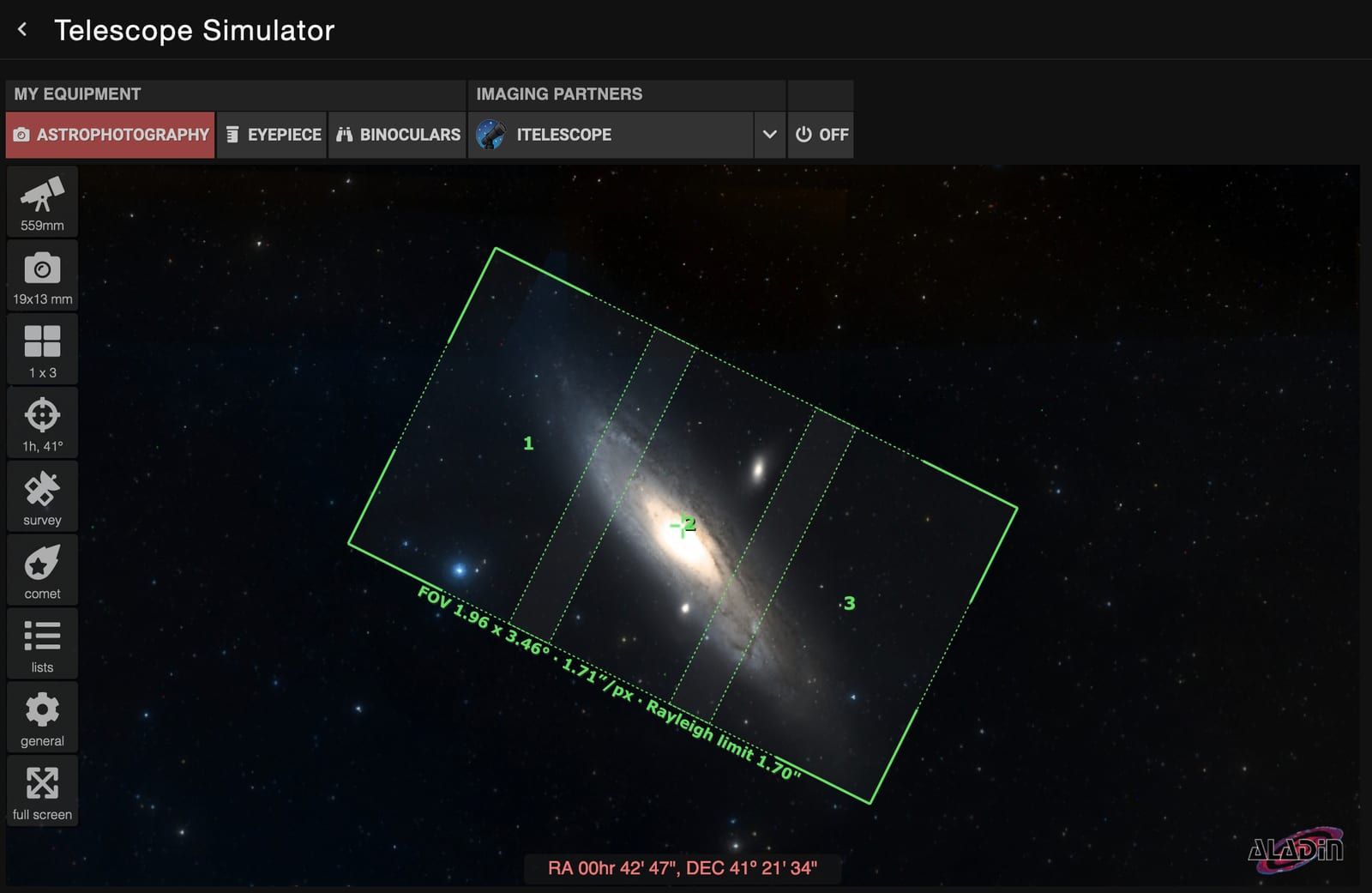
As darkness presented itself on the first night, I executed on my plan, performing a quick alignment and focusing routine. I then input the imaging plan to my ASIAir Pro, making use of the contents of the CSV file I’d generated earlier. The telescope swung into position and commenced imaging and a short while later the first sub rolled in. So far, so good.
As seems to be a recurring theme during my astrophotography adventure thus far, a new issue swiftly presented itself.
In a hobby that involves so many precise actions and exact ordering it’s easy to make a small slip-up which can cause everything to fall apart. Fast forward to later in the evening and this was exactly what happened.
In my haste to get setup, I’d forgotten to account of the angle of rotation that my camera was positioned at versus that of the angle of rotation Telescopius was using. I should have matched the two up to ensure that whatever I was looking at on the website matched the reality of what I was going to capture. Sadly, this wasn’t the case and it became very apparent when I checked to see how the imaging was going after the first panel of the mosaic had been completed and imaging on the second had commenced.
The framing of the second panel subs was completely wrong. So much so that I wasn’t even close to capturing the target the way I’d intended. My plan to create a tryptic had gone out the window and it was time to alter course.
I should have paused, reset the angle of rotation on the camera and restarted the sequencing again. Hindsight is such a wonderful thing!
In reality I decided to change the plan entirely and opted to lock the telescope onto the Andromeda Galaxy directly and start capturing a large number of subs that I could stack together with the subs from the first panel of the tryptic. This gave me an opportunity to gather a vast amount of data on the target that could still produce a high-quality image.
With that, I persevered over the next couple of nights, capturing over 8 hours of data. Compare this with my last attempt at imaging the Andromeda Galaxy in November 2021, I only gathered just shy of 2.5 hours. A huge difference with a lot of potential!
Next came the hard part, stacking and processing the data into something respectable and something I could be proud of. This is also a big part of why it’s taken me so long to write this blog post. I processed the data many months ago but wasn’t entirely happy with the final image. I redid it several times over and still wasn’t happy so I decided to shelve it for a while and come back to it with fresh eyes later on. Roll on several months to the present day and I’ve finally gotten around to reprocessing and I’m much happier with the results. I hope you like it too!