
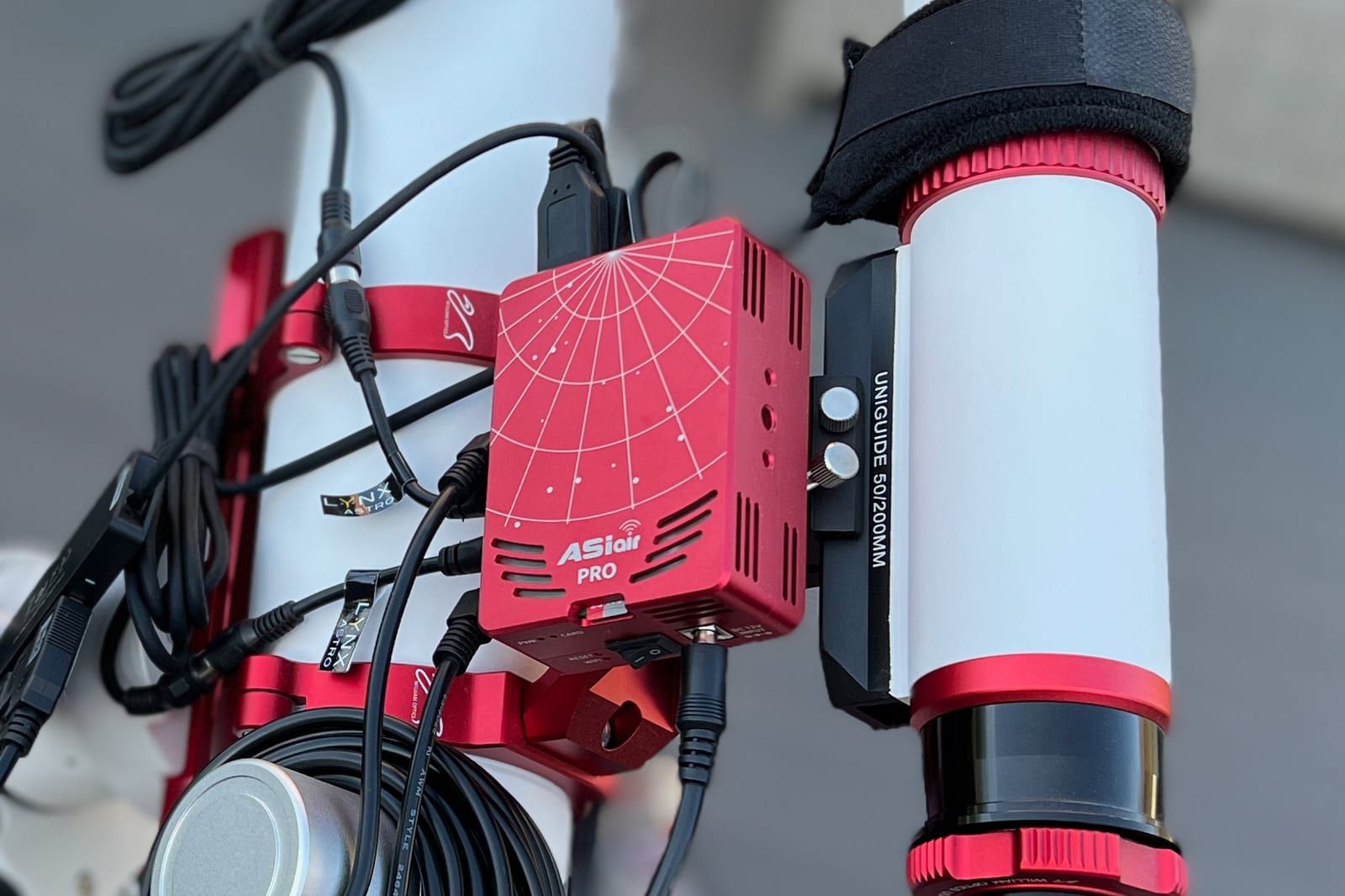
This post will be short and sweet, focusing on a couple of pointers I’ve found rather effective in improving guiding when using a ZWO ASI Air Pro (this model has been discontinued now but the advice is likely still applicable to later models too).
The ASI Air is a brilliant piece of kit and worth every penny in my view. The little red box is packed with a huge amount of functionality, one of the best features being its auto guiding capability.
Before I get to the advice, I want to make a point which I cannot stress enough. It is critical to ensure your mount is properly levelled, balanced and polar aligned first. Without doing so the guiding algorithm will be fighting a losing battle all night long.
Now that’s out the way, let’s get back to the matter at hand: pointers specific to improving auto guiding with the ASI Air.
Factory Defaults
Within the guide settings panel you’ll find a few fields which by default are all set to 2000ms. These include Calibration Step, Max DEC Duration and Max RA Duration.
I’m not entirely sure why they’re all such large values, however I’ve personally found them to be rather ineffective. Reducing them each to a maximum of 500ms seems to work much better. In the case of the Max DEC Duration and Max RA Duration I personally use 400ms.
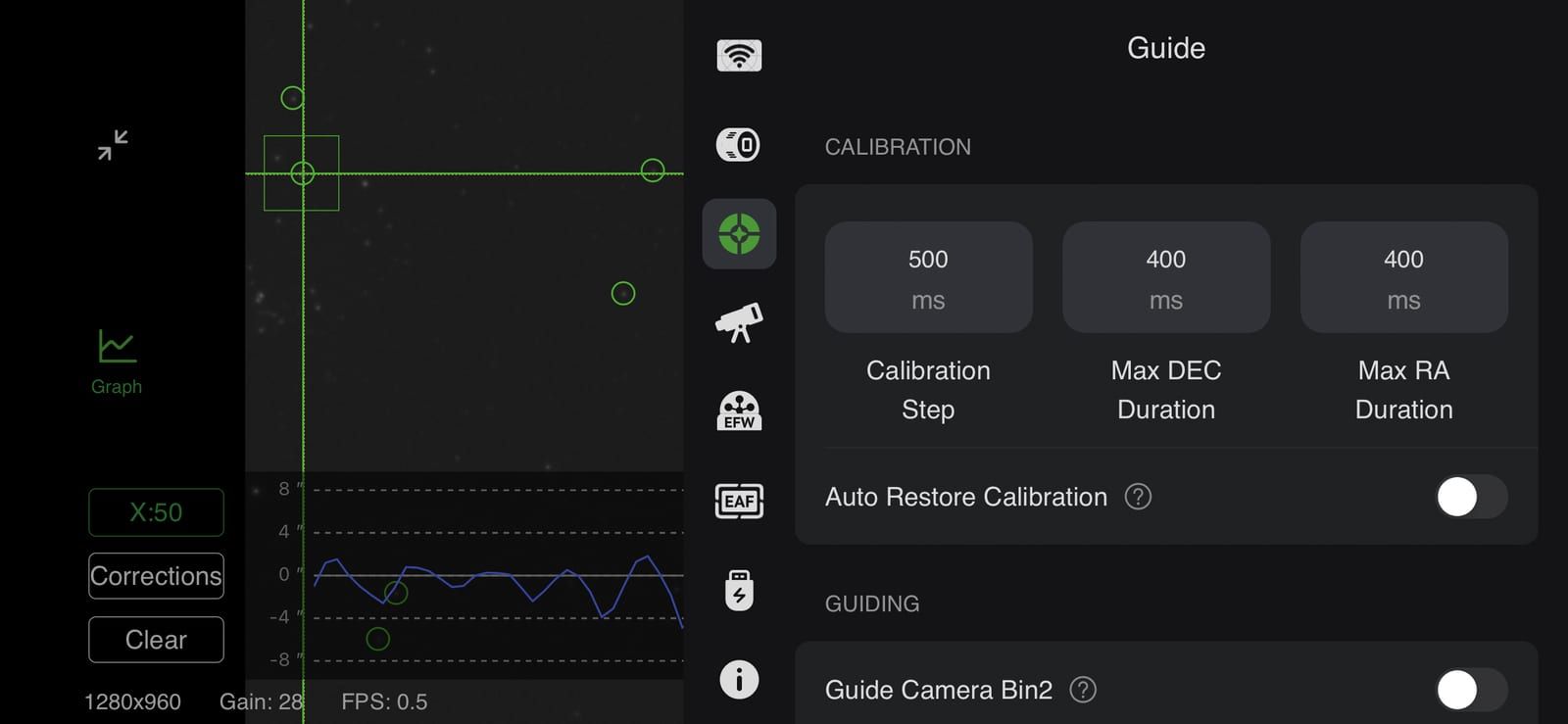
A quick and simple improvement straight out the starting gate.
RA & Dec Agg
Once you’re up and running with auto guiding in flight your attention normally shifts to the real-time graph which gives you a view on how effective and accurate your setup is. In general the aim is to minimise the guiding error both in RA and DEC, ideally keeping the numbers to the right of the graph below 2".
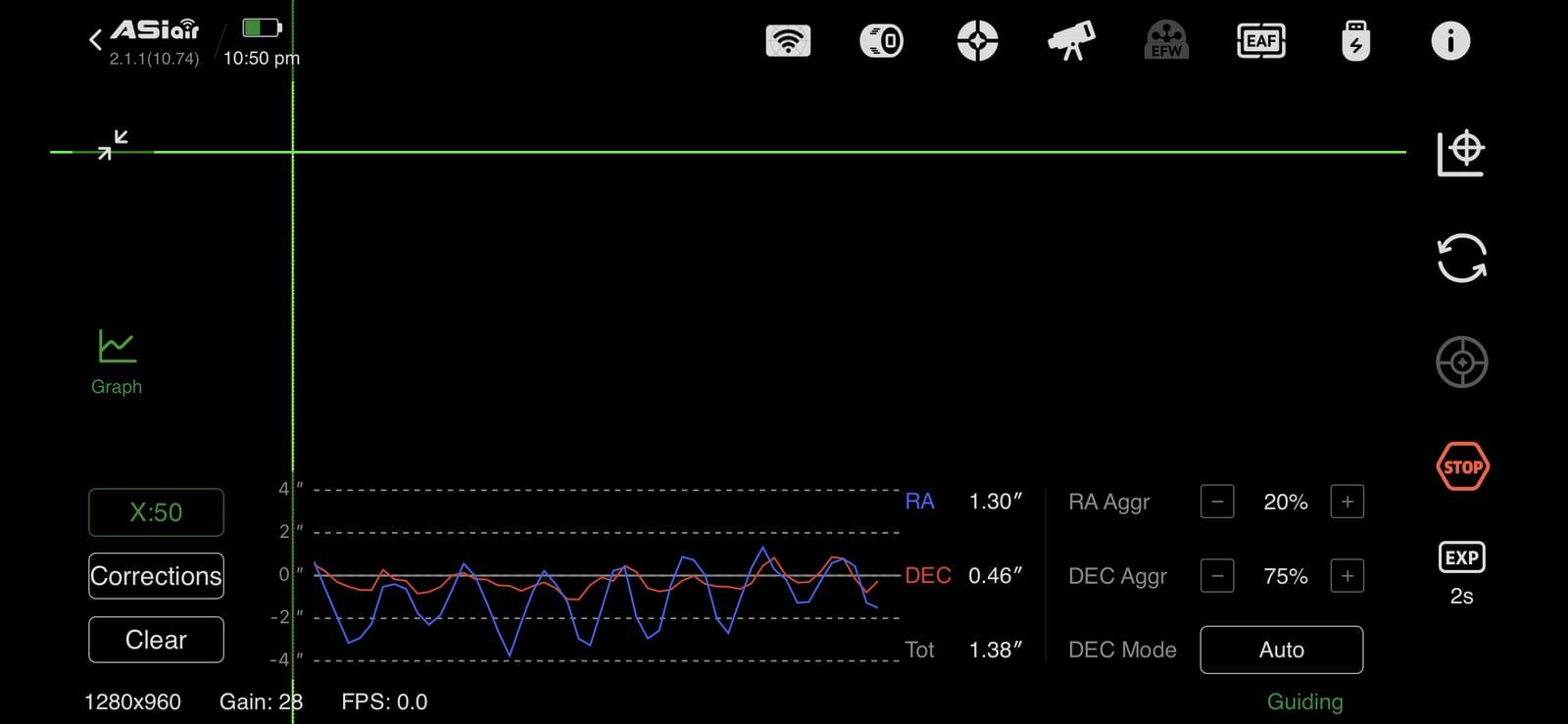
This leads me onto the second piece of advice: you can adjust the RA Aggr and DEC Aggr values to improve your guiding accuracy.
You'll need to refer to the graph to determine whether your guidance is over or under correcting. Let's take RA as an example in from the screenshot, in this setup the graph is pretty spiky which means the algorithm is overcorrecting too much one way, then overcorrecting the opposite way repeatedly. To address this you could reduce the RA Aggr value which will drop the aggressivness of the corrections applied, hopefully flattening out the graph and reducing the guiding error.
The other scenario is where the algorithm isn't correcting enough and the guiding gradually stray further and further from where it needs to be. The would look like a relatively flat line which is off the centre line on the y-axis (0"). To address this you would want to increase the Aggr value.